
Friday, December 22, 2006





Thursday, December 21, 2006


"We had it all . . . just like Bogie and Bacall"
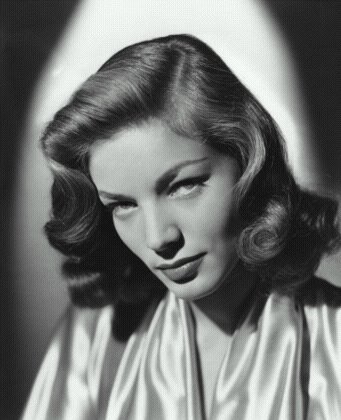 Lauren Bacall
Key Largo
Wrapped around each other
Tryin' so har-ard to stay-ay warm
That first cold winter together
Lyin' in each other's arms
Watchin' those old movi-ies
Falling in love so desperately
Honey I-I was your hero
And you were my leading la-ady
We had it all
Just like Bogie and Baca-all
Starring in our own late, late show-ow
Sailin' away to Key Largo
Here's lookin' at you-ou kid
Missin' a-all the things we did
We can find it once again, I know
Just like they did in Key Largo
We had it all (we had it a-all)
Just like Bogie and Baca-all
Starring in our own late, late show-ow
Sailin' away to Key Largo
Here's lookin' at you-ou kid (here's lookin' at you kid)
Missin' a-all the things we did
We can find it once again, I know
Just like they did in Key Largo
We had it all (we had it a-all)
Just like Bogie and Baca-all
Starring in our own late, late show-ow
Sailin' away to Key Largo
(Lyrics by Bertie Higgins)
VICTORIA FALLS
 Nothing can prepare any man for Victoria Falls in Zimbabwe, Mosi-oa-Tunya, the smoke that thunders. While you are still pocketing your entrance ticket, your words will disappear into the air as over ten million litres of water a second plunge 100 km over the edge. From before you catch your first sight of torrents, you will be soaked with spray - this is no time for modesty. And then the glory of the falls themselves - sheets of endless water thundering into the Zambezi below. But yet more amazing than all this is the lunar rainbow. At the rising of the full moon the park will stay open late, and above one of the world's natural wonders, on the border of two African nations, you can see a shimmering spectrum of colours.
With Karen Akers you feel the joy and the pain
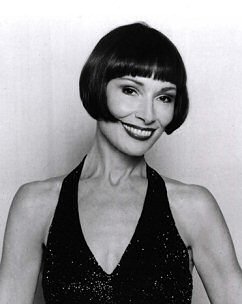
 Karen Akers makes a stunning stage appearance, with a twenties-look helmet bob framing cheekbones a fashion model would kill for, and a wide smile that she offers graciously and easily. She's fashionably thin, groomed with understated chic, and gives the impression of being confident and relaxed on stage. That may be the result, in part at least, of the thorough preparation evident in her show: Akers knows her material inside and out and has her delivery down to a T.
She has all the tools - a buttery, round, sweet mezzo instrument which she most often uses sparingly, but is capable of opening up to a satisfyingly full sound; faultless breath control and pitch; and an intelligence in phrasing and the delivery of a lyric that matches anyone in the business today.
 From her charming and thoughtful chat between numbers, the audience learns a bit of her expatriate's experience of longing to be wherever she's not - expressed in song in a twined medley of an old Josephine Baker number, "J'ai duex amours" and the American folk song, "Shenendoah." Whether in Paris by the Seine, longing for the States, or somewhere in Virginia by the Shenendoah thinking of Paris, there's also the element of just wishing to have the luxury of time to stop and watch the rolling river, as it were. It is at this sort of gentle rue that Akers is at her best.
 Akers sings about love that's good, and love that's gone wrong, typified by one telling phrase that passes quickly: "coming together, staying alone." There's a torchy, bluesy "Paris is a Lonely Town" (Harburg-Arlen), the highly nostalgic "Not Exactly Paris," Jacques Brel's "Marieke." A somewhat more contemporary sound is offered by Randy Newman's "Feels Like Home."
Akers mines a narrow range of mood and emotion. "Paris in the Rain" does have a change of pace waltz beat and a light comic twist, and "Sympathique" is another bit of comic relief - if essentially a one-joke song. But it's the love gained, love lost theme that predominates and, while Akers is a good singing actress, she never really opens herself up emotionally. She projects a shimmering, artful surface, but the feelings are those of the song, never those of the singer of the song.
 A big number for Akers is "Non, Je Ne Regrette Rien." Akers sings the song beautifully and lets her voice out big for the climax. But she 's not convincing; she hasn't plumbed the powerful emotion of this anthem to courage. The comparison to Piaf is inevitable and invited by the choice. When Piaf sang this song she bared her soul; she brought her own painful experiences of life to the lyric and her refusal to have regrets was powerful, gutsy. It's a song that should grab viscerally and make the listener feel what the singer feels.
There is, surely, a style in the cabaret tradition - Mabel Mercer herself comes to mind - that focuses on the intellectual side: on the musicality and on the intelligent delivery of the lyric. Karen Akers excels on those counts.
A TOYLAND OF AMAZING WONDERS

Los Angeles' stores were chockfull of fantastic new toys for the holidays, The Times reported under the headline "Baby Autos and Flyers, More Freaky Wonders Than Ever in Toyland."
"Toyland is a wondrous realm to wade through this year. Never has the ingenious brain of the inventor put forth such a freaky lot of toys as may be found in the big department stores," The Times said.
"A few years ago, the woolly dog on wheels, the terrible tin horn, with its inevitable accompaniment, the drum, and the crying doll were samples of the toys that were unloaded on the childhood world," the newspaper said.
"Now there are automobiles, flying machines, animals of every description that don't stare stupidly like their predecessors, but dance and buck, kick and bray, and do all sorts of things, each according to its kind. The butterfly, the beetle, the elephant, the mule, the seal and almost the whole range of the animal kingdom from the insect to the mastodon is represented, usually in tin, and each is made instinct with life, for a time, with clockwork and key."
(From the "Times Past" column in today's Los Angeles Times referring to December 21,1902)
Wednesday, December 20, 2006
A SHORT RUN FOR A GREAT SHOW THAT STILL MIGHT MAKE IT
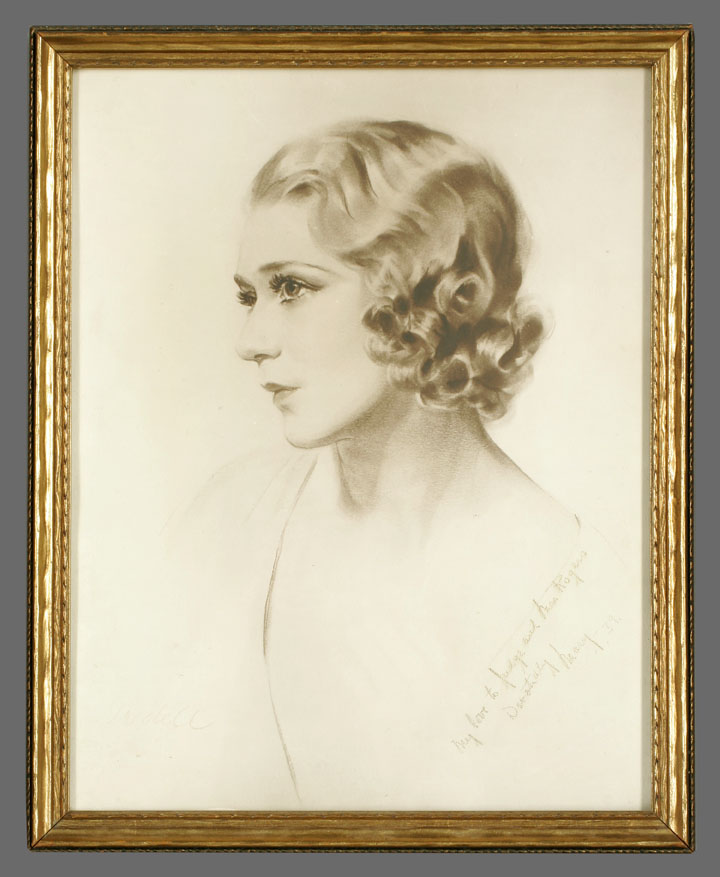
 Mack & Mabel is a romantic musical comedy based on the relationship between two of the pivotal figures of the silent film era: slapstick comedy pioneer Mack Sennett and his frequent leading lady Mabel Normand.
 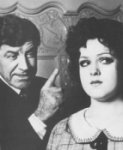 Robert Preston and Bernadette Peters starred as "Mack" and "Mabel"
The story begins in 1911, when Mabel shows up on Sennett's New York set as a deli delivery girl and immediately catches the director's eye. Soon she is starring in Sennett's two-reelers and she joins him when he moves his operation to the new movie capital of Hollywood.
She also joins him in a romance, one which is complicated by Sennett's dictatorial directing style. When Mabel expresses an interest in expanding into feature dramas, Sennett discourages her, leading her to leave him professionally - and personally - for slick director William Desmond Taylor.
However, Mack promises us a happy ending and after all - it is his show...
 The music and lyrics for Mack and Mabel are by Jerry Herman (famous for Hello Dolly!, La Cage Aux Folles and Mame, among others.) The book is by Michael Stewart (who also worked with Herman on Hello Dolly!).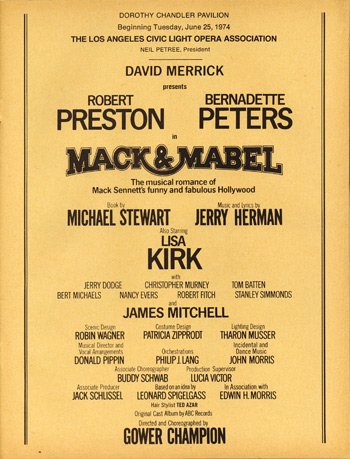
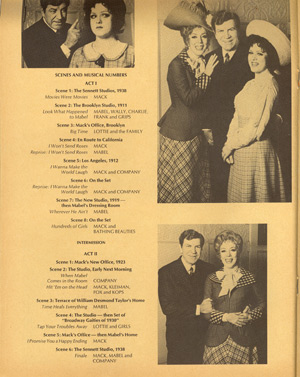
The original version of this show (which opened on Broadway in 1974) was not a financial success. Despite receiving eight Tony Award nominations, it only ran for 66 performances. The version that The Players are presenting is a major revision by Francine Pascal that opened in London in 1995. This revised version has since played worldwide to rave reviews and has enjoyed long runs. The rumor persists, this revised version of Mack and Mabel is headed back to Broadway.
Ernestine Had All the Answers
 Ernestine, the Telephone Operator - Celebrity pseudonym of comedienne Lily Tomlin when she portrayed "Ernestine, the telephone operator" on the comedy variety program ROWAN AND MARTIN'S LAUGH-IN/NBC/1968-73. Seated behind an antique switchboard, looking like a fourth Andrew Sister, Ernestine played havoc with the Phone Company customer. Unofficially, her motto might be "Reach out and BUG someone." As she waited for her phone call to go through to her customers, she listened to the phone ringing at the other end of the line and counted "one ringy-dingy, two ringy-dingy...." When someone answered, she nasally continued with "A gracious good morning to you...Have I reached the party to whom I am speaking?" From then on, all "Bell" broke loose as Ernestine abused her phone customers, intermittently laughing like a pig (snort! snort!).
  "Here at the Phone Company we handle eighty-four billion calls a year. Serving everyone from presidents and kings to scum of the earth. (snort) We realize that every so often you can't get an operator, for no apparent reason your phone goes out of order [snatches plug out of switchboard], or perhaps you get charged for a call you didn't make. We don't care. Watch this [bangs on a switch panel like a cheap piano] just lost Peoria. (snort) You see, this phone system consists of a multibillion-dollar matrix of space-age technology that is so sophisticated, even we can't handle it. But that's your problem, isn't it ? Next time you complain about your phone service, why don't you try using two Dixie cups with a string. We don't care. We don't have to. (snort) We're the Phone Company!" -- Lily Tomlin from "Saturday Night Live: The First 20 Years" (1994 Cader Company).
 Lily Tomlin's sharp-tongued satires of such a "sacred cow" as the Phone Company, especially in the rebellious years of the late 1960s endeared her to millions of viewers. In January 1970, California telephone operators made Miss Tomlin an honorary member of their union, and presented her with a special Cracked Bell award. Subsequently, the Bell System offered Tomlin $500,000 to do a series of Ernestine commercials. She turned down their substantial offer, reportedly because she feared losing artistic control of her character.
 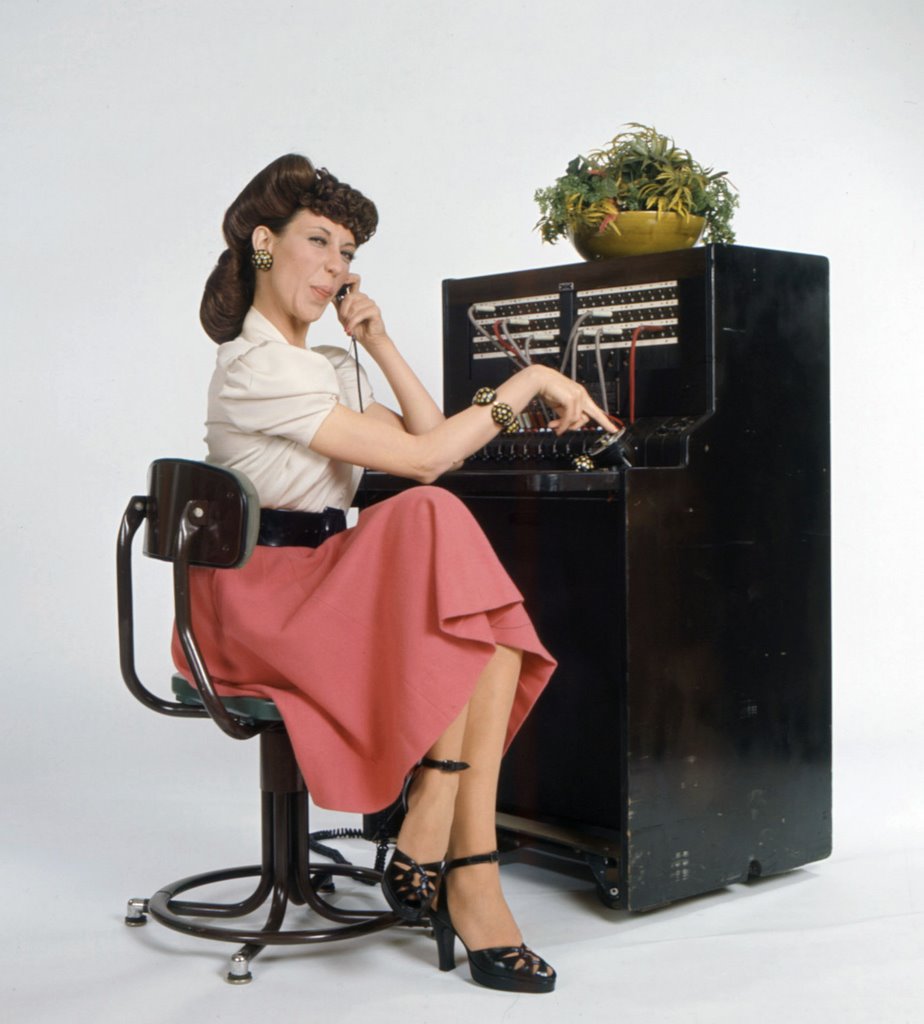 Lily's first comedy album "This Is A Recording" (Polydor, 1971) was recorded live at the Icehouse in Pasadena. The album features bits with Ernestine dealing with problems from an "Obscene Phone Call"; mistaking a phone call from mafia boss for the Pope; calling actress Joan Crawford (then head of the Pepsi Company) to demand her dime back because the Pepsi machine didn't dispense her pop; butting head with J. Edgar Hoover of the "F.B.I."; and a conversation with writer Gore Vidal as Ernestine says "Mr. Veedle, you owe us a balance of $23.64. When may we expect payment? É Pardon? When what freezes over? É I don't see why you're kicking up such a ruckus when according to our files your present bank balance, plus stocks, securities, and other holdings, amounts to exactly ... Pardon? Privileged information? Oh! (snort, snort) Mr. Veedle, that's so cute! No, no, no, youÕre dealing with the telephone company. We are not subject to city, state, or federal legislation. We are omnipotent."
Bavarian Beauty
 In Bavaria, tiny Buchenberg is a place of pastoral fun, with forest hikes and swimming at a lake with a grassy beach.
Tuesday, December 19, 2006

A Sign on the Back Said "You've Just Been Passed By A Tucker"
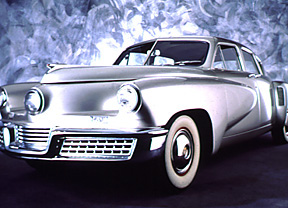 The Tucker 1948 automobile, brainchild of Preston Thomas Tucker and designed by renowned stylist Alex Tremulis, represents one of the last attempts by an independent car maker to break into the high-volume car business. Ultimately, the big three would continue to dominate for the next forty years. Preston Tucker was one of the most recognized figures of the late 1940s, as controversial and enigmatic as his namesake automobile. His car was hailed as "the first completely new car in fifty years. " Indeed, the advertising promised that it was "the car you have been waiting for." Yet many less complimentary critics saw the car as a fraud and a pipe dream. The Tucker's many innovations were and continue to be surrounded by controversy. Failing before it had a chance to succeed, it died amid bad press and financial scandal after only fifty-one units were assembled.
In 1948 I was a young schoolboy fortunate enough to have the opportunity to tour the Tucker plant in Chicago on a school field trip. I marvelled at this automobile, and still do today.
Acapulco Still Has a Little Bit of Heaven
 The Acapulco Princess reigns over 480 acres of legendary scenery. Tucked away on Revolcadero Beach, 20-minutes from the bustle of downtown and a few minutes from the airport, the 15-story Aztec pyramid-shaped building, gardens, pools, golf course, and more cater to the desires of the world's most discriminating guests.
Reception takes place in an open-air lobby flanked by charming fountains. A lively lobby bar takes full advantage of the splendid scenery indoors. Outside, five free-form swimming pools - one a saltwater lagoon - grace the property, surrounded by gardens containing over 750 plant species and sheltering a colorful assortment of swans, flamingos and tropical birds.
How much do you know about Houdini ??
 Houdini (born Erich Weiss) took his stage name in honor of French magician Jean Eugene Robert-Houdin, but later wrote the book The Unmasking of Robert-Houdin, an expose of the magician's methods.
Houdini was a movie producer and actor, a magician, an escape artist and an exposer of fraudulent mediums. He was also one of the first people to pilot an airplane in Australia.
 Houdini became the most famous escape artist of all time, but he was not double-jointed, as is sometimes reported.
 Houdini's house in NYC is still standing, and still sports the custom inlaid floor tiles with Houdini's HH initials.
 Houdini did not die while performing the Water Torture Cell illusion, but died of peritonitis from a ruptured appendix (the same condition that killed Rudolph Valentino).
Houdini died in Grace Hospital in Detroit on Halloween, and is buried in his family's plot in New York.
Houdini is the invited guest at seances held every Halloween, the anniversary of his death.
Harry Houdini's brother, Hardeen, was a Leap Year Centennial baby- he was born on February 29, 1876.
Houdini is still today one of the ten most recognized celebrity names in the world.
UPDATE ON HOUDINI'S DEATH - MARCH 23, 2007 (NEW YORK) — Legendary escape artist Harry Houdini mystified audiences with his daring stunts, but his death on Halloween 1926 was even more mysterious.
Houdini, buried in Machpelah Cemetery in Queens, had been struck in the abdomen before he died, leading some to suspect foul play.
Today, relatives of both Houdini — born Erich Weiss — and one of the magician's archenemies are planning to call for the exhumation of Houdini's remains for clues to his death.
A coauthor of a recent book about Houdini, Larry Sloman, told Newsday that one possible scenario was that Houdini was poisoned by someone in a movement in which mediums purported to contact the dead in seances. Toward the end of his life, Houdini had dedicated himself to exposing spiritualist mediums as frauds.
If that were true, Sloman said, "the poison would remain in the system" of Houdini's body — even 80 years after his death.
Sloman, who with William Kalush wrote "The Secret Life of Houdini," said that when Houdini died at age 52, officials attributed the cause to "traumatic appendicitis" brought on by a blow to his stomach. Doctors now know it is impossible for a blow to the stomach to cause appendicitis, he said.
Speculation about Houdini's death has been fueled by questions about an "experimental serum" given to Houdini in the hospital, the lack of an autopsy and indications that his wife, who died later, may have been poisoned at the same time, Sloman said.
George Hardeen, whose grandfather was Houdini's brother, said: "It needs to be looked at. His death shocked the entire nation, if not the world. Now, maybe it's time to take a second look."
Anna Thurlow of Hampton Bays, N.Y., a great-granddaughter of Houdini's nemesis, a medium known as Margery, agreed.
"We need to use science to understand the world around us and to correct history," she told Newsday. "History might have had something wrong."



Subscribe to:
Posts (Atom)