Saturday, January 28, 2006

WHAT A CURIOUS SIGHT . . . AND I WONDERED WHAT TRIGGERED IT ??


I was taking my daily walk and as I neared the end of the Manhattan Beach Pier I turned to walk in toward the beach when I noticed a curious sight in the sky. High above the structures a large number of birds were circling. There were perhaps a hundred or more birds flying in close formation like a swarm of bees. I walked on and as I neared the start of the pier I could see that the swarm was coming closer and that they were flying lower. Then the realization hit me. These were Richard's friends. They were waiting for him a couple of blocks from the pier where he parks his car and then they proceeded to escort him on his walk to the pier. Then I saw Richard coming down the sidewalk with his following close at hand. Richard wasn't feeling well but that didn't prevent him from keeping his daily appointment with his friends. Each day Richard comes to the pier to provide food, fresh water and, on warm days, a shower for his feathered friends. Below is the collage I used with my May, 2005 posting about Richard's daily visits to dispense kindness and sustenance to his growing number of friends. Richard, I hope your recovery is rapid and complete. Manhattan Beach is enriched by your presence.

Friday, January 27, 2006

IF YOU HAVEN'T SEEN THE NICHOLAS BROTHERS, THEN YOU'VE MISSED THE MOST SPECTACULAR, MAGICAL "ALL NATURAL" SPECIAL EFFECTS IN CINEMA HISTORY


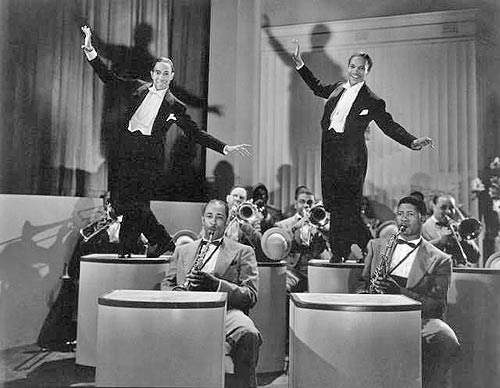
Fayard Nicholas, the elder half of the show-stopping Nicholas Brothers tap-dancing duo that thrilled audiences during the 1930s and beyond with their elegance and daring athleticism, has died. He was 91. The picture above shows Fayard (on the left) and his brother Harold.

The self-taught Nicholas Brothers — Fayard and Harold — tap-danced their way from vaudeville and Harlem's legendary Cotton Club to Broadway and Hollywood. Known for their airborne splits and acrobatics, the handsome, dapper duo is considered by many to be the greatest dance team ever to work in American movies.
The Russian ballet dancer Mikhail Baryshnikov once called them "the most amazing dancers I have ever seen in my life — ever."
When filmgoers saw the Nicholas Brothers' dazzling acrobatic routine in the 1940 movie musical "Down Argentine Way" (starring Don Ameche, Betty Grable and Carmen Miranda), they were known to applaud and stomp their feet until the projectionist rewound the film and played the dance sequence again.

Fred Astaire considered the Nicholas Brothers' "Jumpin' Jive" dance sequence in the 1943, all-black musical "Stormy Weather" the greatest dance number ever filmed. "With its spectacular splits and leaps, their 'Jumpin' Jive' number is easily the most exhilarating dance routine in all of cinema.

The show-stopping performance, set in a large cabaret with the Cab Calloway band playing, has the brothers jumping onto tabletops and leaping off a grand piano onto the dance floor in full splits.

The highlight of their breathtaking, synchronous routine occurs when they leap over each other in splits while descending an oversized staircase. "That was one take, coming down those stairs … jumping over each other's heads," Nicholas told The Times in 1989.

Their first major film musical, "Kid Millions" featured Eddie Cantor (1934). "The Big Broadcast of 1936" followed. The Nicholas Brothers appeared on Broadway in "The Ziegfeld Follies of 1936" and in 1937 they worked with ballet choreographer George Balanchine in the Rodgers and Hart Broadway musical-comedy "Babes in Arms."

These two were giants among the legends.

Thursday, January 26, 2006

ANOTHER GLORIOUS DAY IN THE SOUTHBAY


Dolphins like the ones pictured above were swimming through the breakers off gusty Manhattan Beach as Santa Ana winds pounded the Los Angeles area for a third straight day Tuesday.

Wednesday, January 25, 2006

A SMALL STYLISH "S U V" THAT LOOKS LIKE A COUPE BUT . . .


it opens up like a roomy van.
The $23,000 Toyota FJ Cruiser created a big buzz at the recent L.A. auto show and is due to be available this spring.

Monday, January 23, 2006

WILT CHAMBERLAIN'S 100-POINT GAME: A LASTING MARK

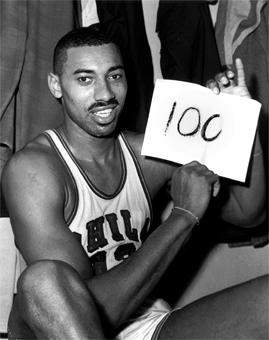
Twenty-five-year-old Wilt Chamberlain's 100-point game on March 2, 1962, still stands as the NBA's single-game record. Wilt and the Philadelphia Warriors beat the New York Knicks 169 to 147.

Thursday, January 19, 2006

A DAY WITH THE SOARING SEA GULLS AND THE DIVE-BOMBING PELICANS

I felt inspired today. Of course, I always feel inspired after taking my daily walk at the seashore and out on the Manhattan Beach Pier. But, today was special. As I walked out on the pier, I saw the puddle of water that told me that Richard had been there showering the pigeons, feeding them and providing them with fresh water. (On May 19, 2005, I did a full posting on Richard and his wonderful project---Check the Archives, May 2005). I'm always reassured by that puddle. The wind was very strong today and the sea gulls were enjoying it immensely. They appeared to be floating, or suspended by an invisible string as they rode on the wind like a kite. Today there were very large waves. It's always exciting to watch those large waves come rolling in, and to see them crashing against the pier. Sometimes if you position yourself just right in relation to the sun, you can see lovely rainbows as the water from the crashing waves flies up into the air. The pelicans were out in formation today conducting their fishing excursions. I"m always amazed to see the pelicans flying along, and then one by one peeling off into a dive straight down into the sea. I try to watch carefully to see if they got their prey. Oh yes, a day at the seashore always reminds me of what a wonderful world we live in and how blessed many of us are.

Friday, January 13, 2006

NICE SKYLINE . . . IS THIS THE REAL NEW YORK, NEW YORK ??


No, it's Legoland in Carlsbad, California where a Lego-block replica of New York City is bathed in the glow of a pyrotechnic sunburst.

What's the difference between a dead snake lying in the road and a dead lawyer lying in the road ??

Answer: There are skid marks in front of the snake.

Why does California have the most lawyers and New Jersey the most toxic waste dumps ??

Answer: New Jersey had first choice.

Thursday, January 12, 2006

REMEMBERING THE LEGENDS OF GOLF IN THE FIFTIES


In 1950, Ben Hogan, nicknamed "Bantam Ben" because of his small size (145 pounds) and called the "Hawk" by fellow players because of the way he studied a course, matched Sam Snead shot-for-shot on the last day of the Los Angeles Open. Hogan was making his miraculous comeback from a near-fatal automobile accident and was leading when he finished his final round at the Riviera Country Club, a course that became known as Hogan's Alley. Snead beat Hogan in a week-delayed 18-hole playoff, 72 to 76. Shown above is a piece of artwork, just like Hogan. Posted by Picasa

SEATTLE'S CELEBRATION . . . WELCOMING 2006 IN STYLE


Seattle's Space Needle takes an active, if nonspeaking role in that city's New Year's Eve fireworks extravaganza.

Saturday, January 07, 2006


yy Posted by Picasa

DO YOU FEAR THIS MAN ?? YOU SHOULD !!


Evangelical leaders said Friday that they were embarrassed and incensed by televangelist Pat Robertson's assertion that Israeli Prime Minister Ariel Sharon, who had suffered a massive stroke, was stricken by God as punishment for ceding the Gaza Strip and a portion of the West Bank to Palestinians last summer. "I'm appalled that Pat Robertson would make such statements. He ought to know better," said Richard Land, president of the Ethics and Religious Liberty Commission of the Southern Baptist Convention, the largest U. S. Protestant denomination. "The arrogance of the statement shocks me almost as much as the insensitivity of it," Land said. We've all heard how "power corrupts," and apparently it is the brain that is corrupted. It's sad how some men of God come to believe they are God. Posted by Picasa

THE IMMORTAL EDITH PIAF . . . SOME SAY HERS WAS THE GREATEST VOICE OF THE TWENTIETH CENTURY


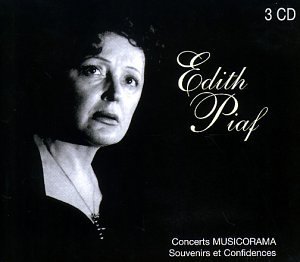
Nicknamed The Little Sparrow, Edith Piaf grew from a frail street singer to a proud icon of French culture. One of her CDs, "The Immortal Edith Piaf", showcases her career through those unique recordings where the naked emotion of her singing overwhelmed all who heard her.


Edith Piaf was born in 1915 in Belleville, a poor district of Paris which she forever regarded as her spiritual home, and she became closely identified with the vibrant creative spirit of the city in the 1930s and 40s. Paris at that time was the intellectual and artistic centre of the world, home to composers Ravel and Stravinsky, artists Matisse, Leger and Picasso and writers Proust, Gide and Cocteau. Cocteau became utterly absorbed by Piaf and described her impact on him with unalloyed wonder: “Every time she sings you have the feeling she’s wrenching her soul from her body for the last time.”


Piaf’s early repertoire was dominated by the songs of Maryse Damia, an impassioned artist known as La Tragedienne De La Chanson who had recorded an interpretation of Gloomy Sunday to rival Billie Holiday’s, and was also noted for performing dressed entirely in black. Piaf herself adopted this style years before Juliette Greco and the 1950s existentialists emulated the same dress code at Le Tabou. Piaf has been "the" French singer, the Parisian street-bird, the dark cabaret muse "par excellence". She was a wild tormented soul when she sang; a tiny silhouette dressed in black, with bony white hands that looked like wounded doves. An illustrious talent, her voice was unique, moving and incendiary. We almost begrudge 'The Sparrow' for having been so colossal (she was only 1m40 tall). Nobody can measure up to her. She is "the" French singer - for whom we are still searching in vain, for an heiress. But Piaf was more than just Piaf, she came after a period which had engendered Cocteaus, Sartres, Chagalls... And she herself gave birth to Montands, Aznavours, Becauds... Piaf was France. A France without marketing, promotion, a hit parade . . . simply talent and, above all, passion.


In September 1958 Piaf was involved in a serious car crash, which weakened her declining health still further. Just a few months after the accident Piaf would collapse halfway through a concert in New York and had to be rushed to the hospital for an emergency operation.
Ignoring the advice of her doctors and her closest friends, Piaf still refused to abandon her singing career. In spite of the fact that she would frequently relive her New York disaster, collapsing on stage several times in mid-performance, Piaf could not imagine life without her music. In 1960 Piaf began working with the young French songwriter Charles Dumont who would offer the singer the most famous song of her entire career, "Non je ne regrette rien" (No Regrets). Piaf was totally bowled over by the song and promised to premiere it at her next major concert, which happened to be L'Olympia. (Piaf had promised Bruno Coquatrix that she would appear at L'Olympia at the beginning of 1961, to help the director save the famous Paris venue from bankruptcy). Piaf threw herself into the lyrics of "Non je ne regrette rien" body and soul, and her performance at the Olympia that night would go down in music history as one of the most legendary concerts of all time.


In the summer of 1961 Piaf would meet a young Greek singer by the name of Theophanis Lamboukas. Theophanis, or "Sarapo" as Piaf preferred to call him ("Sarapo" being Greek for "I love you"), would be the last in Piaf's long line of husbands and lovers. Just as she had done with so many of the previous men in her life, Piaf would take charge of Sarapo's career, using her name to launch the young unknown.


In September 1962 Piaf returned to L'Olympia to give her final series of concerts at the legendary Paris venue. On 25 September the singer was a special guest star at the international premiere of the film "The Longest Day". Appearing on a stage erected on the top floor of the Eiffel Tower, Piaf gave the performance of a lifetime, singing her greatest hits to a massive audience which included royalty, heads of state and a crowd of international celebrities.
A few days after this triumphant concert, Piaf went on to marry Theo Sarapo at a private orthodox ceremony on 9 October 1962. After an extended honeymoon, the couple would return to the music scene, performing their famous duo "A quoi ça sert l'amour ?" at the Bobino in February 1963.


Two months later Piaf would fall into a coma. The singer would spend the last months of her life, slipping in and out of consciousness in her villa in Plascassier near Cannes. Piaf would finally pass peacefully away in her home in the South of France on 11 October 1963, dying on the same day as her old friend Jean Cocteau.
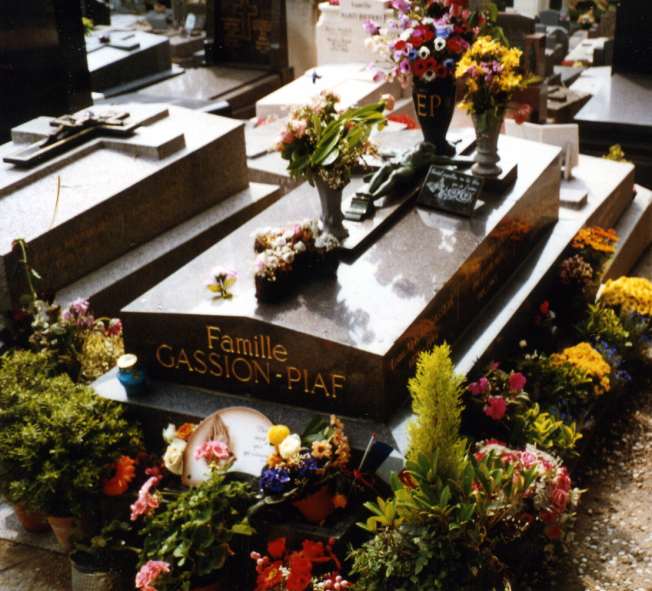
The news of Piaf's death caused a national outpouring of grief. She was forbidden a Mass by the archbishop of Paris (because of her lifestyle), yet her ceremony at Pere-Lachaise was bombarded by forty thousand fans. Charles Aznavour, whom she helped launch in show business, recalled that Piaf's funeral procession was the only time, since the end of World War II, that Parisian traffic came to a complete stop. Tens of thousands of fans flocked to Paris on 14 October to follow the singer's coffin to its final resting-place in the Père Lachaise cemetery. Today Piaf's tomb remains one of the most visited sites at Père Lachaise, thousands of fans making an annual pilgrimage to the cemetery to lay flowers on her grave.


Meanwhile, more than thirty years after her death, Piaf's legend continues to inspire the French music scene. In 1996 the phenomenal success of the Paris stage musical "Piaf je t'aime" proved that thousands of Piaf fans old and new were still eager to relive the dramatic events of the singer's incredible lifestory.
Since Piaf's death in 1963 a host of international stars - including Louis Armstrong, Josephine Baker, Marlene Dietrich, Johnny Hallyday, Serge Gainsbourg and Liza Minnelli - have been lining up to record their own versions of Piaf's legendary songs. French pop star Etienne Daho recently recorded a modern upbeat version of "Mon manège à moi" and in 1997 Charles Aznavour, one of Piaf's closest friends and most fervent admirers, recorded a new version of the Piaf classic "Plus bleu que tes yeux". Thanks to the wonders of modern technology, studio technicians were able to resurrect Piaf's voice from old recordings and mix it with Aznavour's vocals, producing a stunning virtual duet.


Edith Piaf has always had a cult following. A voice like hers comes along perhaps once in a century. Her sad and valiant life story steals hearts.

Friday, January 06, 2006

CHIEF CRAZY HORSE RIDES AGAIN . . . . . OR WILL HE ??


The Crazy Horse monument in the Black Hills of South Dakota was started in 1948 and the face has been completed. Below, there's a museum, conference center, restaurant, theater and gift shop. The widow of Polish American artist and accomplished sculptor Korczak Ziolkowski works tirelessly to finish his work. "It was his lifetime and it's my lifetime," she says. The completed sculpture will portray Sioux chief Crazy Horse, on horseback as shown below.  Posted by Picasa

This is what the Crazy Horse monument will look like when completed. The face is larger than all four Mt. Rushmore presidential faces together. Posted by Picasa

Wednesday, January 04, 2006

ONE OF SAN FRANCISCO'S OLDEST REMEMBERS THE 1906 EARTHQUAKE AND FIRE


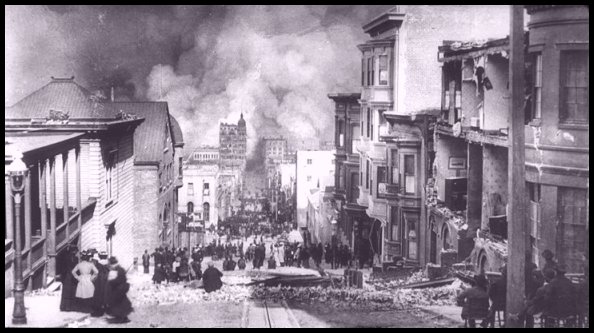
Lucille Meyer, believed to be one of the city's oldest native residents, marked her 109th birthday on Friday, Dec. 30. The mother of two has 20 great-grandchildren and one great-great grandchild who was born last fall. She is believed to be one of the oldest survivors of the great earthquake and fire that destroyed the city in April 1906. Meyer was 9 when the earthquake and resulting fire struck, burning the city for four days and destroying the Meyer family home. The experience of watching the city burn and living near the wreckage still haunts her every time there is an earthquake. Posted by Picasa

Saturday, December 31, 2005

SIXTEEN-YEAR-OLD IDEALIST FARRIS HASSAN DECIDED TO "WALK THE WALK"


BAGHDAD — A 16-year-old from Florida who traveled to one of the world's most dangerous places without telling his parents left Baghdad on Friday to begin his journey home, the U.S. Embassy said. The teenager spoke to Associated Press early Friday, several hours before the embassy announcement, and he was still under the impression that he would be following his personal travel itinerary, which had him leaving the country by himself Sunday.

He wasn't even aware that the story of his perilous travels had made the news around the world — or that his mother was being interviewed on television. "I don't have any Internet access here in the Green Zone, so I have no idea what's going on," he said. Hassan left the United States on Dec. 11 and traveled to Kuwait, where he thought he could take a taxi into Baghdad and witness the Dec. 15 parliamentary elections.

Hassan had recently taken a class on immersion journalism — when a writer lives the life of his subject — and wanted to understand better what Iraqis were living through.

The teenager was able to secure an entry visa because his parents were born in Iraq, though they've not been there in more than three decades. Skipping a week of school, he told only two of his school friends of his plans to leave the country. He didn't tell his parents until he arrived in Kuwait.

"He is very idealistic. He has many convictions. He is very pro-democracy, very compassionate, always helping out others, he's very driven," his mother said. "Those are more characteristics of Farris than adventurous. This is the first adventure he's been on." In Kuwait, a taxi dropped him in the desert at the Iraq border, but he could not cross over because of heightened security ahead of the elections.He then went to Beirut to stay with family friends, and from there flew to Baghdad on Christmas Day. After his second night in Baghdad, he contacted Associated Press, saying he had come to do research and humanitarian work. The news agency called the U.S. Embassy, which sent American soldiers to pick him up.

Shown below are his thoughts and ideas that he wrote while on this mission. His mother should be very proud.

. . . and here's what the young idealistic Farris Hassan wrote about Iraq and its struggle:

There is a struggle in Iraq between good and evil, between those striving for freedom and liberty and those striving for death and destruction. You are aware of the heinous acts of the terrorists: Women and children massacred, innocent aid workers decapitated, indiscriminate murder. You are also aware of the heroic aspirations of the Iraqi people: liberty, democracy, security, normality. Those terrorists are not human but pure evil. For their goals to be thwarted, decent individuals must answer justice’s call for help ... So I will.

Life is not about money, fame, or power. Life is about combating the forces of evil in the world, promoting justice, helping the misfortunate, and improving the welfare of our fellow man. Progress requires that we commit ourselves to such goals. We are not here on Earth to hedonistically pleasure ourselves, but to serve each other and the creator. What deed is greater than sacrificing one’s luxuries for the benefit of those less blessed? ...

I know I can’t do much. I know I can’t stop all the carnage and save the innocent. But I also know I can’t just sit here ...

I feel guilty living in a big house, driving a nice car, and going to a great school. I feel guilty hanging out with friends in a cafe without the fear of a suicide bomber present. I feel guilty enjoying the multitude of blessings, which I did nothing to deserve, while people in Iraq, many of them much better then me, are in terrible anguish. This inexorable guilt I feel transforms into a boundless empathy for the distress of the misfortunate and into a compassionate love for my fellow man ...

Love and kindness are never wasted. They always make a difference. They bless the one who receives them, and they bless the one who gives them.

Going to Iraq will broaden my mind. We kids at Pine Crest (School) live such sheltered lives. I want to experience during my Christmas the same hardships ordinary Iraqis experience everyday, so that I may better empathize with their distress. I also want to immerse myself in their environment in order to better comprehend the social and political elements ...

I plan on doing humanitarian work with the Red Cross. I will give my mind, body, and spirit to helping Iraqis rebuild their lives. Hopefully I will get the chance to build houses, distribute food supplies, and bring a smile or two to some poor children.

I know going to Iraq will be incredibly risky. There are thousands of people there that desperately want my head. There are millions of people there that mildly prefer my demise merely because I am American. Nevertheless, I will go there to love and help my neighbour in distress, if that endangers my life, so be it ...

If I know what is needed and what is right, but do not act on my moral conscience, I would be a hypocrite. I must do what I say decent individuals should do. I want to live my days so that my nights are not full of regrets. Therefore, I must go.


Thursday, December 29, 2005

THE WISDOM OF CALVIN


calvin and hobbes Posted by Picasa

"FOR THE WORLD'S IN A WONDERFUL WAY ON A WONDERFUL DAY LIKE TODAY"


Here's a wonderful song that Anthony Newley sang, and it always reminds me how lucky I am---how lucky many of us are in this crazy and wonderful world:


On a wonderful day like today
I defy any cloud to appear in the sky
Dare any rain drop to plop in my eye
On a wonderful day like today

On a wonderful morning like this
When the sun is as big as a yellow balloon
Even the sparrows are singing in tune
On a wonderful morning like this

On a morning like this I could kiss everybody
I'm so full of love and goodwill
Let me say furthermore
I'd adore everybody to come and dine
The pleasure's mine and I will pay the bill

May I take this occasion to say
That the whole human race should go down on its knees
Show that we're grateful for mornings like these
For the world's in a wonderful way
On a wonderful day like today

ON A WONDERFUL DAY LIKE TODAY
From the London show
"The Roar Of The Greasepaint - The Smell Of The Crowd" (1965
(Leslie Bricusse / Anthony Newley)

The URGE comes with an Xbox 360 and uses the steering wheel and pedals to control play


Nissan Motor Co. next month will unveil at Detroit's auto show a concept sports car, called the Urge, equipped with Microsoft Corp.'s Xbox 360 video game system.

When the car is parked, the steering wheel, gas and brake pedals and a 7-inch liquid crystal display screen that drops down from the rearview mirror turn it into a personal video arcade so the driver can play the "Project Gotham Racing 3" game.

The car-racing game, which works only when the Urge is stationary, allows players to virtually speed through the streets of London, Tokyo, Las Vegas and New York and to compete on a German test track.

When the URGE is stationary, the steering wheel, pedals and drop-down screen can be used for a video game.

THE BERGHOFF IN CHICAGO IS CLOSING AFTER A RUN OF 107 YEARS


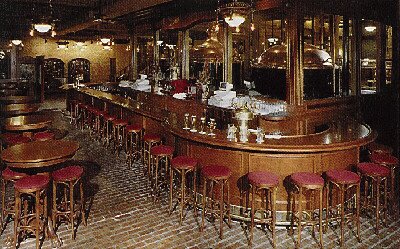
For generations, diners with a craving for apple strudel or a stein of cold German beer have sidled up to the bar at the Berghoff Restaurant which is closing after 107 years in business. It's part of Chicago's history. After Prohibition ended in December 1933, the city issued the Berghoff Liquor License No. 1.

UPDATE: (April 22, 2006) The Berghoff Restaurant which closed in February, quietly reopened this week as the Berghoff Cafe: same menu, same decor and some of the same staffers. Third-generation owner Herman Berghoff,70, had closed the restaurant. His daughter Carlyn decided to bring it back with traditional Berghoff dishes including Wiener schnitzel and schlachtplatte. Welcome back !!

The Back Bar at the Berghoff in Chicago